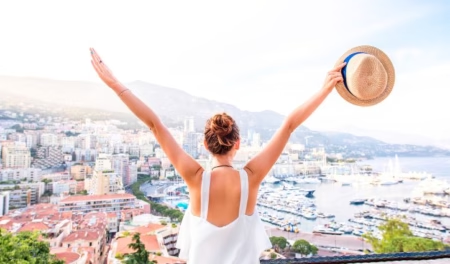







Travel used to feel simpler. You picked a place, booked a hotel, packed your bags, and went. Somewhere along the way, vacations became performances. You had to see everything, photograph everything, and return exhausted but satisfied that you had “done” the destination.
That mindset is wearing thin.
More travelers now want trips that feel human again. Fewer crowds. Less rushing. More mornings without alarms. More evenings where nothing is planned and that feels like the point.
This article isn’t about the “best” places in the world in any ranking sense. It’s about destinations that give you space—to rest, to explore at your own pace, and to feel like yourself again while traveling.
If that’s the kind of vacation you’re planning, read on.
A Place That Slows You Down Without Trying – Faroe Islands
The Faroe Islands don’t ask for your attention. They don’t sell an image. They just exist.
Driving through the islands feels like moving through open space rather than through a destination. Roads are quiet. Villages are small. The weather changes without warning, and no one seems bothered by it.
You stop often—not because something is marked as a “must-see,” but because the landscape demands it. A waterfall appears beside the road. Fog rolls in suddenly. Sheep wander where they please.
This is not a place for busy travelers. It’s for people who are comfortable doing less and noticing more. If silence makes you uneasy, this might not be your destination. If silence feels like relief, it’s unforgettable.
A City That Refuses to Be Simplified – Istanbul
Istanbul doesn’t fit neatly into travel categories, and that’s its strength.
It’s loud, layered, confusing at first, and deeply rewarding once you stop trying to understand it all. History isn’t something you visit here—it’s something you walk through on your way to lunch.
One street feels ancient. The next feels modern. Ferries cross continents like it’s a normal commute. Locals argue about football, drink tea, sell bread, pray, laugh, and live their lives right in front of you.
The best moments in Istanbul are unplanned. Sitting near the water longer than intended. Getting lost and not caring. Eating something you didn’t order but were given anyway.
It’s not a city you conquer. It’s a city you accept.
When Nature Becomes the Main Conversation – Banff National Park
There are places where your phone becomes less interesting without effort. Banff National Park is one of them.
The mountains don’t feel decorative. They feel present. Lakes don’t look inviting—they look commanding. Everything feels larger than you, but not threatening.
Days in Banff often start early because your body wants to, not because you planned it. You walk more. You talk less. Even small hikes feel meaningful.
This is a destination for travelers who are tired in a deep way. Not “need a nap” tired. The kind that comes from too much noise, too many screens, too many decisions.
Banff doesn’t entertain you. It steadies you.
A Beach Destination That Still Feels Honest – Zanzibar
Zanzibar doesn’t rush.
The ocean sets the schedule. The sun decides the pace. Even time feels different here, softer somehow.
Yes, the beaches are beautiful, but what stays with you is the rhythm of life. Fishermen heading out early. Quiet afternoons. Evenings where nothing happens and that feels right.
Stone Town adds complexity. History isn’t polished; it’s layered and sometimes uncomfortable. That contrast makes the island feel real, not curated.
Zanzibar works best if you don’t try to “do” it. Stay longer. Walk more. Sit more. Let the place reveal itself slowly.
A European City That Still Feels Livable – Ljubljana
Ljubljana doesn’t perform for tourists.
It feels like a city built for people who live there first. Streets are walkable. Cafés aren’t rushed. Locals don’t seem irritated by visitors.
You can cross the city center in minutes, but there’s no pressure to move quickly. The river becomes a meeting place rather than a landmark. Evenings stretch comfortably.
It’s the kind of city where you stop checking the time. Where travel feels gentle instead of demanding.
For many travelers, that’s more valuable than famous monuments.
A Landscape That Changes Your Perspective – Atacama Desert
The Atacama Desert doesn’t offer comfort. It offers clarity.
The land is dry, open, and stark. Colors shift with the light. Distances feel longer than expected. Nights are silent in a way cities never are.
Traveling here forces adjustment. You drink more water. You walk slower. You listen to your body.
What you gain isn’t excitement—it’s perspective. Standing under a sky that vast rearranges your thoughts. Problems shrink. Priorities shift.
Atacama stays with you long after the dust leaves your shoes.
A City That Feels Like Everyday Life at Its Best – Melbourne
Melbourne doesn’t demand attention. It earns it slowly.
It’s a city built on habits—coffee rituals, neighborhood walks, weekend markets, late dinners. Creativity exists without being loud about it.
You can spend days here doing ordinary things and still feel like you’re traveling. There’s comfort in that.
Melbourne suits travelers who don’t want intensity every hour. Who enjoy wandering without purpose. Who like cities that feel lived-in rather than staged.
High Altitude, Low Noise – Ladakh
Ladakh requires patience.
The altitude slows you physically. The culture slows you mentally. There is no rushing here—your body won’t allow it.
Monasteries sit quietly above the valleys. Conversations are brief but sincere. Roads stretch far with little interruption.
Traveling in Ladakh feels less like tourism and more like adaptation. You learn to rest. To listen. To accept discomfort without resisting it.
Few places change your internal pace the way Ladakh does.
Why These Places Feel Different
None of these destinations try to impress you.
They don’t promise transformation. They don’t shout about being “life-changing.” They simply offer space—for thought, rest, curiosity, and presence.
They work because they allow you to stop performing travel.
Planning a Better Trip (Not a Bigger One)
Travelers are learning something important: doing less often means experiencing more.
That looks like:
-
Staying longer in one place
-
Avoiding peak seasons
-
Leaving days unplanned
-
Choosing comfort over coverage
A good trip doesn’t feel packed. It feels balanced.
Final Thought
The best vacations don’t announce themselves as the best.
They show up quietly—in a slow morning, an unplanned walk, a conversation you didn’t expect to have. They give you back something you didn’t realize you were missing.
If you choose destinations that respect your pace instead of challenging it, travel becomes something else entirely.
Not an escape.
A reset.