
Author: Mark

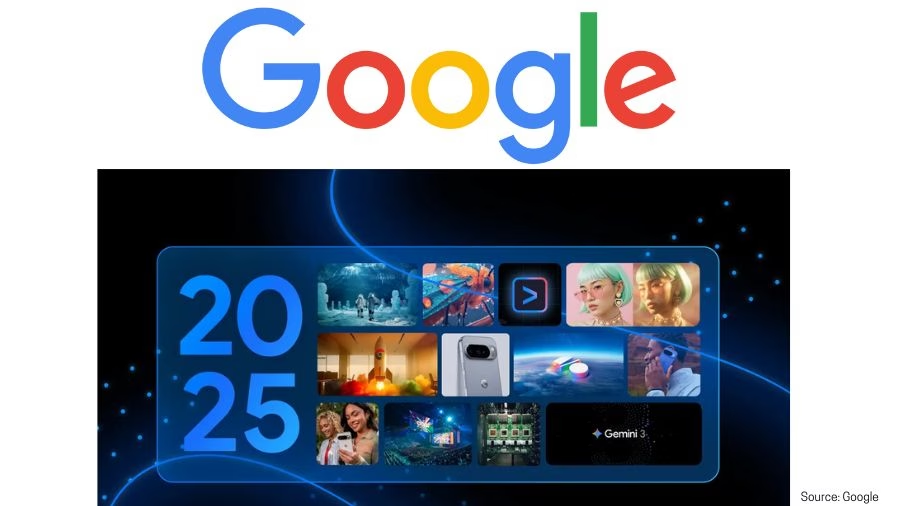
As 2025 comes to an end, it feels natural to look back at the major AI milestones that shaped the year for Google. And what a year it was — Google shared hundreds of AI-related announcements covering new products, upgraded features, and tools designed to make everyday life simpler in big and small ways. Here’s a recap of some of the most important AI highlights from across the year. January The new year began with strong momentum as Google rolled out multiple updates linked to Gemini, Android, Google TV, education tools like NotebookLM, and more — ensuring AI benefits reached…
Apple has introduced a major update to its iOS platform in Japan as part of its efforts to comply with the country’s new Mobile Software Competition Act (MSCA). The update, released as part of iOS 26.2, is one of the most significant changes to Apple’s mobile ecosystem in the region, giving developers more freedom in how they distribute and monetize their apps — while also introducing new safety measures. Opening App Distribution Beyond the App Store Under the MSCA’s requirements, Apple now allows developers in Japan to distribute iOS apps through alternative app marketplaces that are authorized by Apple. These…

Travel used to feel simpler. You picked a place, booked a hotel, packed your bags, and went. Somewhere along the way, vacations became performances. You had to see everything, photograph everything, and return exhausted but satisfied that you had “done” the destination. That mindset is wearing thin. More travelers now want trips that feel human again. Fewer crowds. Less rushing. More mornings without alarms. More evenings where nothing is planned and that feels like the point. This article isn’t about the “best” places in the world in any ranking sense. It’s about destinations that give you space—to rest, to explore…
Every business leader eventually runs into the same three questions. Something shifts in the numbers, something unexpected happens in the market, and suddenly everyone’s asking: What went wrong? What’s coming next? And what exactly are we supposed to do about it? For a long time, the honest answer depended mostly on experience and gut instinct. A bit of pattern recognition. A bit of judgment. Sometimes a bit of luck. But over the last few years, something very different has crept into those conversations. Big data didn’t just arrive quietly — it walked straight into the decision-making room and took a…
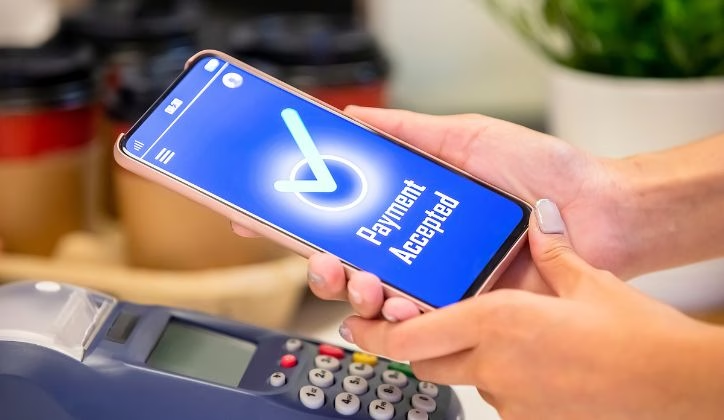
There was a time when paying for something came with a rhythm. Notes unfolded, coins clinked, and a brief pause marked the moment money changed hands. That pause has almost vanished. Today, a payment can happen in silence. A phone lights up, a watch vibrates, or a QR code flashes, and it’s done. No counting. No waiting. Often, no second thought. What’s striking isn’t just how fast digital payments spread, but how easily people accepted them. Cash didn’t disappear because it failed. It simply became less convenient than the alternatives quietly lining up to replace it. From Physical Money to…
Not long ago, branding was mostly about visibility. Make a good product, repeat the message often enough, and growth would follow. That logic still applies, but it no longer works on its own. Consumers today move quickly. They scroll faster, question more, and trust less. What stops them is not another sales promise, but a sense of intent. How a brand behaves, who it supports, and what it avoids saying all matter as much as what it sells. Social impact, once treated as a side initiative, has quietly moved into the centre of business strategy. Not because it sounds good,…

There’s a quiet confession many travellers make these days, usually after they return. They aren’t talking about sightseeing. Or luxury. Or ticking places off a list. They’re talking about sleep. Stillness. Breathing space. Feeling normal again. Somewhere between endless notifications, stretched workdays, and bodies that no longer bounce back the way they used to, travel changed its role. Holidays stopped being an escape. They became a form of repair. That shift explains why wellness tourism has grown faster than any other segment in global travel — without fanfare, without slogans, and without waiting for permission. When Travel Stopped Being About…
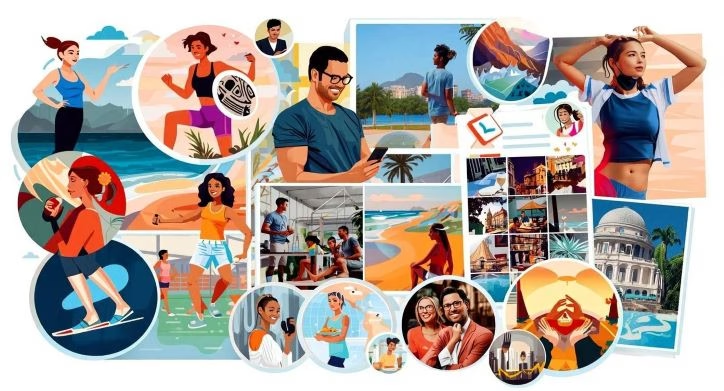
Social media has shifted from a communication tool to a lifestyle decision engine, quietly influencing what people eat, wear, buy, value, and aspire to—often before those choices feel conscious. Algorithms now shape taste, ambition, and identity by amplifying what looks successful or desirable, making modern lifestyle choices less about tradition or expertise and more about visibility, relatability, and repetition. Platforms that were built to help people stay connected are now influencing how they eat, work, travel, and decide what success looks like. Not loudly. Not all at once. Just steadily, over time. Lifestyle choices today are less shaped by tradition…

A decade ago, cybersecurity incidents were discussed in hushed tones, usually after something went wrong. A server went down. Customer data leaked. An apology followed. That script no longer works. By 2026, cyber threats are constant, visible, and increasingly public. Breaches are disclosed on social media before internal teams finish their first emergency call. Regulators demand explanations. Customers expect transparency. Investors expect resilience. For global businesses, cybersecurity is no longer about preventing embarrassment. It’s about maintaining the ability to operate at all. Cybercrime in 2026: A Mature, Relentless Industry Cybercrime today looks less like chaos and more like structure. Attack…
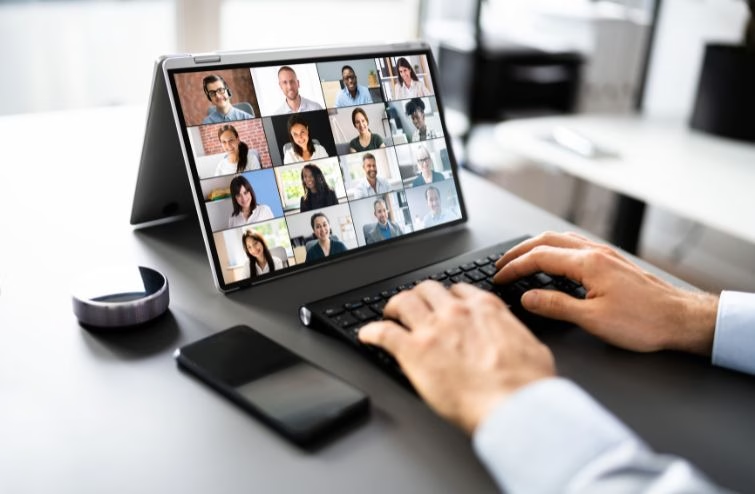
When offices shut and laptops came home, many professionals thought they had finally cracked the work-life balance puzzle. No commute. No rigid schedules. Meetings in comfortable clothes. On paper, it sounded like progress. But something unexpected happened along the way. Work didn’t shrink to fit life. It quietly expanded into it. Days blurred. Evenings felt half-owned by email. Weekends carried a low hum of unread messages. People weren’t necessarily working longer hours—but they were thinking about work far more often. Remote and hybrid work didn’t destroy work-life balance. It exposed how fragile it always was. What changed wasn’t just where…