





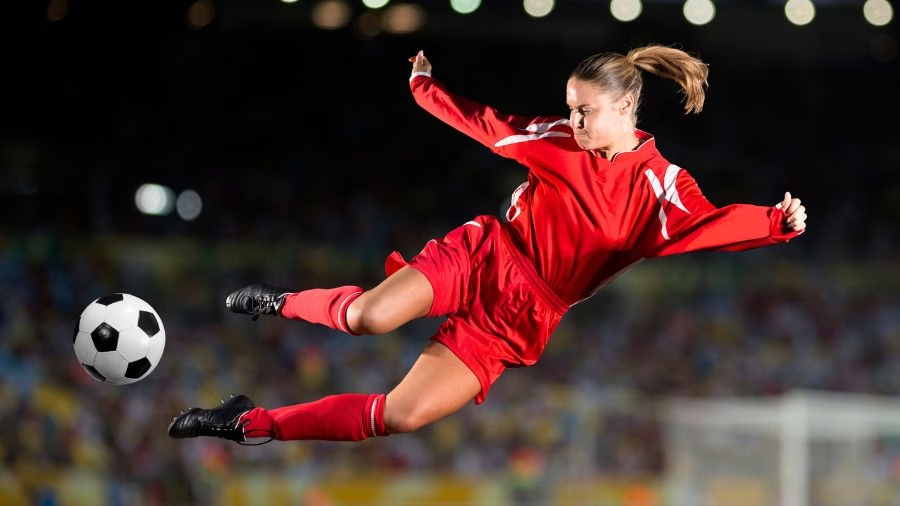
On a summer evening not long ago, millions of people tuned in to watch a women’s football final. Stadiums were full. Merchandise sold out. Sponsors lined up. For many fans, it felt normal. For the sports business world, it was a wake-up call.
Women’s sports didn’t suddenly arrive on the global stage. They fought their way there. For decades, female athletes competed with limited funding, minimal media attention, and little commercial backing. Yet quietly, persistently, they built loyal audiences and undeniable momentum.
Now the conversation has shifted. Brands, broadcasters, and investors are no longer asking if women’s sports are commercially viable. They’re asking how fast they can get involved without missing the moment.
From Undervalued to Unstoppable: A Brief Shift in the Sports Economy
For much of modern sports history, commercial investment followed visibility, and visibility followed outdated assumptions. Men’s sports were considered the default product. Women’s sports were treated as a niche or, worse, a charity project.
That thinking is collapsing.
According to industry estimates from Deloitte and PwC, global revenue from elite women’s sports crossed the $1 billion mark recently, with projections pointing sharply upward over the next few years. That figure doesn’t even account for grassroots spending, digital content, or athlete-driven brand deals.
What changed wasn’t talent. It was access.
Broadcast exposure, social media platforms, and a cultural push for equity opened doors that had been shut for generations. Once fans could actually see women’s sports, they responded.
Media Coverage: The Catalyst That Changed Everything
Television Rights and Streaming Deals
Media coverage is the engine of sports commerce. When women’s sports finally began receiving consistent airtime, the commercial math shifted almost overnight.
Major broadcasters now compete for rights to women’s leagues and tournaments. Deals once considered “add-ons” are becoming standalone properties.
Examples include:
-
Women’s football leagues securing multi-year broadcast agreements
-
Tennis Grand Slams committing to equal on-court scheduling
-
Women’s cricket drawing prime-time television slots
Streaming platforms have also played a decisive role. Digital-first audiences don’t carry old biases. If the product is compelling, they watch.
Social Media Changed the Rules
Female athletes built audiences long before traditional media paid attention. Instagram, YouTube, and TikTok became personal broadcast networks.
Athletes didn’t just post highlights. They shared training routines, personal struggles, and behind-the-scenes moments. Fans connected on a human level.
That connection now translates into measurable value for sponsors.
Sponsorships: Why Brands Are Betting Big on Women’s Sports
A Different Kind of Brand Association
Sponsoring women’s sports offers something rare in modern marketing: authenticity.
Audiences often view brands supporting women athletes as progressive, values-driven, and socially aware. That perception matters, especially with younger consumers.
According to marketing surveys:
-
Gen Z audiences are more likely to trust brands involved in women’s sports
-
Women’s sports sponsorships often deliver higher engagement per dollar spent
-
Brand recall tends to be stronger due to less advertising clutter
This isn’t about charity. It’s about efficiency.
Case Study: Football, Fitness, and Fashion
Global sportswear brands once focused nearly all budgets on men’s teams. Today, women athletes lead some of their most successful campaigns.
Signature boots, apparel lines, and lifestyle collections built around female athletes now generate serious revenue. Some even outperform men’s equivalents in online sales.
Why? Because the storytelling feels real.
Ticket Sales and Live Attendance: The Myth of “Low Demand”
One of the longest-standing myths in sports business is that women’s sports don’t sell tickets. Recent numbers tell a different story.
Women’s football tournaments, basketball leagues, and cricket finals have posted:
-
Record-breaking stadium attendance
-
Sell-out crowds in major cities
-
Growing season-ticket holder bases
Affordable pricing played a role, but experience mattered more. Fans felt welcomed. Families felt included. The atmosphere was different, and many preferred it.
Once fans attend a women’s sporting event, repeat visits become common.
Merchandise and Licensing: An Untapped Revenue Stream Awakens
For years, fans struggled to find official women’s sports merchandise. Jerseys were limited. Sizes were inconsistent. Designs felt like afterthoughts.
That gap created pent-up demand.
When leagues and teams finally invested in proper merchandising, sales surged. Online platforms made global distribution easier, and athlete-led branding added emotional appeal.
Popular merchandise categories include:
-
Replica jerseys and team apparel
-
Athlete-branded lifestyle wear
-
Collaborations with fashion and streetwear labels
Merchandise is no longer a side business. It’s becoming a core revenue pillar.
Prize Money and Pay Equity: Commercial Impact Beyond Headlines
Equal pay debates often focus on fairness, but there’s a commercial dimension too.
When prize money increases, professionalism improves. Athletes can train full-time, extend careers, and elevate performance levels. That improves the product on the field.
Tennis demonstrated this effect clearly. Equal prize money at Grand Slams didn’t hurt revenues. It coincided with global growth in viewership and sponsorship value.
Pay equity isn’t just moral. It’s strategic.
Women’s Sports Leagues as Investment Assets
Private Equity Steps In
Investors once avoided women’s leagues, assuming limited returns. That mindset has flipped.
Private equity firms, venture capital funds, and celebrity-backed groups are acquiring stakes in:
-
Women’s football clubs
-
Basketball franchises
-
Emerging professional leagues
Valuations remain relatively affordable compared to men’s sports, making entry attractive.
Many investors see women’s sports where men’s leagues were decades ago: early-stage, underpriced, and poised for long-term growth.
Long-Term Growth, Not Short-Term Hype
Unlike speculative trends, women’s sports benefit from structural tailwinds:
-
Rising participation among girls
-
Strong school and collegiate pipelines
-
Cultural shifts toward gender equity
-
Digital-native fan bases
This growth feels durable.
The Role of Major Tournaments in Global Commercial Expansion
Large-scale tournaments act as accelerators. They compress years of growth into weeks.
When international women’s competitions receive global exposure, several things happen at once:
-
New sponsors enter the market
-
Host cities benefit from tourism and hospitality spending
-
Media coverage normalizes elite women’s sport
After major tournaments, domestic leagues often see attendance spikes and sponsor interest.
Momentum feeds momentum.
Athlete Branding: From Players to Powerful Media Brands
The Rise of the Athlete-Entrepreneur
Many female athletes now operate like startups. They manage personal brands, negotiate sponsorships directly, and launch businesses while competing.
Examples include:
-
Fitness platforms built by athletes
-
Media production companies
-
Social-impact ventures aligned with personal values
Brands don’t just sponsor athletes anymore. They collaborate with them.
Why Athlete Voices Matter
Audiences respond to athletes who speak honestly about mental health, motherhood, injuries, and identity. These conversations humanize sport.
That emotional depth creates loyalty, and loyalty drives long-term commercial value.
Corporate Social Responsibility Meets Smart Marketing
Supporting women’s sports allows companies to align profit with purpose without appearing performative.
When done well, sponsorship feels organic. It reflects genuine commitment rather than surface-level branding.
Companies that invest early often become category leaders within leagues, gaining:
-
Long-term association rights
-
Stronger brand trust
-
Lower cost-per-engagement
This balance between ethics and economics is rare, and brands recognize it.
Challenges That Still Shape the Commercial Landscape
Despite progress, obstacles remain.
Women’s sports still face:
-
Uneven media coverage across regions
-
Limited grassroots funding in some countries
-
Underrepresentation in leadership roles
Commercial growth must be matched with governance reforms, transparent investment, and sustainable league structures.
Ignoring these factors risks repeating mistakes made elsewhere in the sports industry.
What Brands, Investors, and Media Can Do Right Now
For stakeholders looking to engage meaningfully, timing matters.
Practical steps include:
-
Investing early rather than waiting for “proof”
-
Supporting storytelling, not just logos
-
Committing to multi-year partnerships
-
Involving athletes in campaign creation
The biggest returns often come from patience and authenticity.
The Cultural Ripple Effect on Business and Society
The rise of women’s sports isn’t happening in isolation. It influences workplaces, advertising, education, and leadership norms.
Young girls see role models. Boys grow up watching women compete at elite levels. Consumers expect brands to reflect the world as it is, not as it was.
That cultural shift carries economic weight.
Conclusion: The Smart Money Is Already Paying Attention
Women’s sports didn’t ask for permission to grow. They earned their place through performance, persistence, and connection with fans.
The commercial impact now unfolding isn’t a trend. It’s a correction.
For businesses willing to look beyond outdated assumptions, women’s sports offer something rare: growth with meaning, returns with relevance, and stories people actually care about.
Those who understand this early won’t just profit. They’ll help define the future of the global sports economy.